
 EN
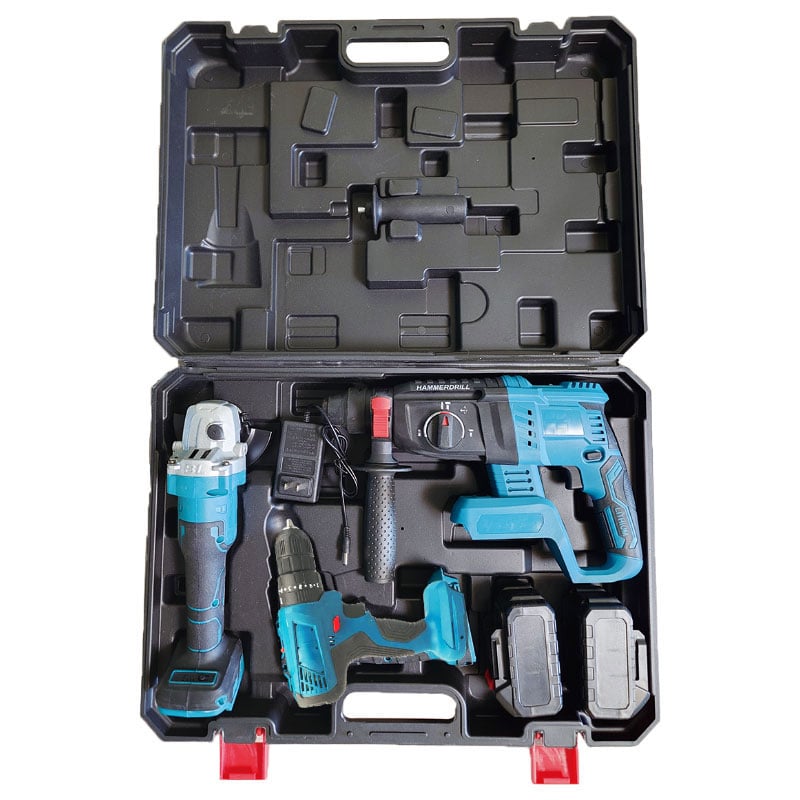
Understanding battery longevity is essential for anyone relying on a power tools set throughout their workday. Battery runtime directly impacts productivity, project completion times, and overall operational efficiency. The duration a power tools set battery lasts depends on multiple interconnected factors, from battery capacity and tool type to usage intensity and environmental conditions. Most modern cordless tool kits offer runtime between two to eight hours of continuous operation, though practical daily usage often spans shorter bursts with multiple recharge cycles.
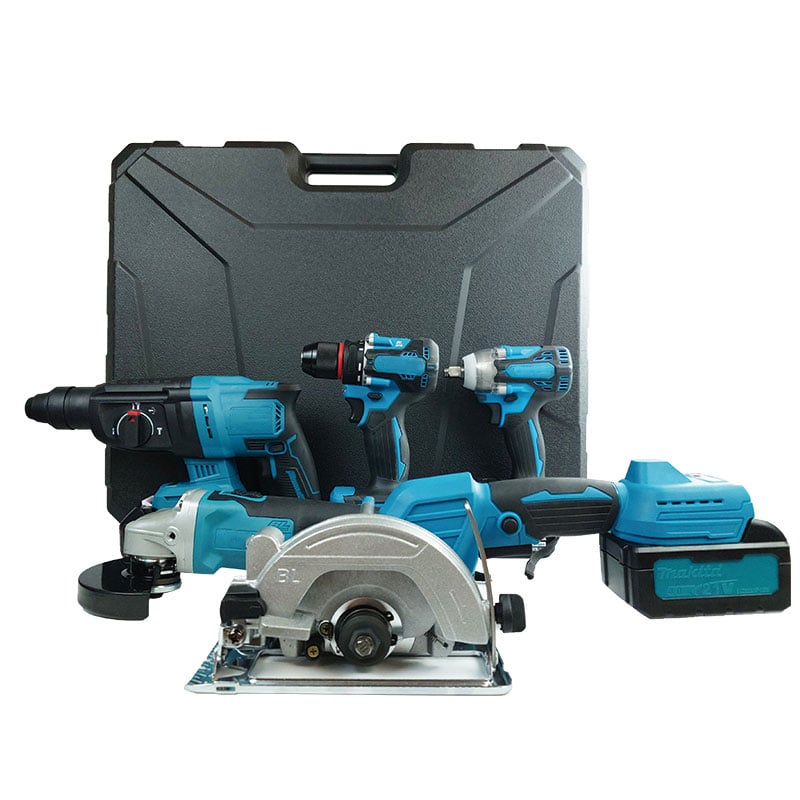
Daily battery performance expectations vary significantly based on the specific portable tool kit configuration and work conditions. Professional hand tool collection users working on construction sites, maintenance tasks, or home renovation projects encounter different battery demands than occasional DIY users. Recognizing these variables helps you plan recharge schedules, purchase appropriate backup batteries, and select a cordless tool kit that matches your operational needs without unnecessary downtime or frustration.
Battery Capacity and Power Ratings
Understanding Amp-Hour Specifications
Battery capacity measured in amp-hours (Ah) directly determines how long your power tools set operates before requiring recharge. A professional hand tool collection with a 4.0Ah battery will generally run twice as long as a 2.0Ah equivalent under identical usage conditions. Voltage also plays a crucial role—an 18-volt cordless tool kit typically delivers more sustained power than a 12-volt model, allowing faster work completion and potentially shorter daily runtime needs. Higher capacity batteries increase weight and initial cost, but they eliminate frequent recharge interruptions during demanding projects.
Battery Chemistry and Performance Impact
Modern lithium-ion batteries dominate portable tool kit design because they maintain consistent power delivery, resist memory effect, and recover quickly between charges. A quality cordless tool kit uses advanced battery management systems that protect against overcharging, over-discharging, and temperature extremes. These systems extend usable battery life and maximize the daily runtime your power tools set delivers. Older nickel-cadmium or nickel-metal hydride batteries degrade faster and provide unpredictable performance, making lithium-ion the industry standard for professional hand tool collection applications.
Tool Type and Daily Usage Patterns
Impact of Tool Function on Runtime
Different tools within your cordless tool kit consume battery power at vastly different rates. Lightweight drilling with a power tools set uses minimal energy, allowing eight-hour daily runtime on a single charge. Impact driving, angle grinding, or chainsaw cutting drains the same portable tool kit battery in two to four hours due to sustained high-power demand. Orbital sanders, reciprocating saws, and heavy-duty cutting tools in a professional hand tool collection exhaust batteries fastest. Understanding which tools in your collection demand the most power helps you estimate realistic daily runtime and plan backup battery procurement accordingly.
Intermittent Versus Continuous Operation
Real-world daily usage rarely involves continuous tool operation. Construction workers, maintenance technicians, and DIY enthusiasts typically use their cordless tool kit intermittently—driving fasteners, then measuring, repositioning, or switching tasks. This intermittent pattern allows partial battery recovery between uses, extending effective daily runtime significantly. A power tools set that provides five hours of continuous drilling might deliver twelve hours of practical daily usage under intermittent work conditions. Professional hand tool collection planning should account for this natural rhythm rather than assuming worst-case continuous operation throughout the entire workday.
Environmental Factors and Optimization Strategies
Temperature Effects on Battery Performance
Temperature dramatically influences how long your portable tool kit battery maintains performance. Cold conditions reduce battery efficiency by fifteen to forty percent, meaning your cordless tool kit operates for significantly shorter periods in winter or refrigerated environments. Heat also degrades lithium-ion cells, though less dramatically than cold exposure. A power tools set battery performing at full capacity in seventy-degree conditions might deliver only sixty percent runtime in thirty-degree weather. Professional hand tool collection users working outdoors or in temperature-extreme environments must account for seasonal performance variation and maintain backup batteries in insulated storage.
Daily Usage Optimization and Maintenance
Maximizing cordless tool kit battery life requires intentional daily practices. Keep your portable tool kit batteries charged between eighty and twenty percent rather than depleting fully or maintaining constant one-hundred-percent charge. Rotate between multiple batteries during intensive workdays, allowing each power tools set battery to cool between uses. Store unused batteries in cool, dry locations rather than hot trucks or direct sunlight. Clean battery contacts regularly to maintain proper electrical connection. These practices extend both daily runtime and overall battery lifespan, ensuring your professional hand tool collection remains productive throughout its service life.
FAQ
How much daily runtime should I expect from a typical cordless tool kit?
A standard portable tool kit with a 4.0Ah battery typically provides four to six hours of mixed-use daily runtime under normal working conditions. Heavy continuous drilling or cutting reduces this to two to four hours, while light intermittent tasks extend effective daily usage to eight to twelve hours. Your specific power tools set will vary based on tool efficiency and work intensity.
Can I extend my power tools set battery runtime during the workday?
Yes, purchasing a second cordless tool kit battery dramatically improves daily runtime. While one battery charges, you work with the other, effectively doubling your productive hours. Professional hand tool collection users on job sites typically carry two or three charged batteries to eliminate downtime. Rapid chargers designed for your specific battery model reduce recharge time to thirty minutes, making rotation practical even on short breaks.
Do different brands offer different battery runtimes for similar portable tool kits?
Battery runtime varies significantly between manufacturers based on circuit design, motor efficiency, and battery management technology. Premium cordless tool kit brands often deliver twenty to thirty percent longer daily runtime than budget alternatives with identical amp-hour ratings. Investing in a reputable power tools set typically provides better value through superior efficiency and battery longevity, ultimately reducing total cost of ownership despite higher initial purchase price.